
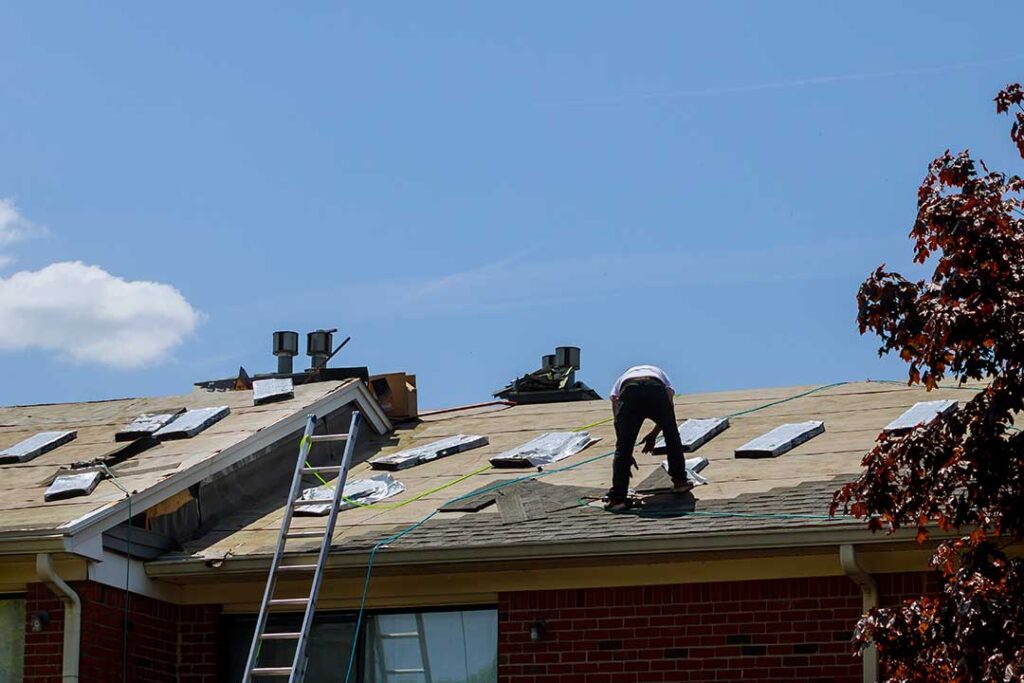
Shade trees can help cool a house, but they also change the conditions directly above and around a roof. In Dunkirk, NY, where roofs experience snow, wind, rain, ice, and seasonal temperature swings, tree placement and maintenance can influence how long roofing materials remain dependable.
Do shade trees help or harm a roof?
Shade trees can do both. Their canopy may reduce direct sunlight and summer heat, which can slow the drying and aging of some roofing materials. However, heavy shade also keeps roof surfaces damp longer, while leaves, needles, branches, and pollen can collect in drainage areas.
The result depends on several factors:
- Distance between the tree and the roof
- Amount of shade throughout the day
- Type of tree and seasonal debris
- Roof slope and drainage design
- Wind exposure and the tree’s condition
- How often debris is removed
A healthy tree located well away from the roof may provide useful summer shade with limited risk. A large tree that overhangs the roof can create repeated moisture, debris, and impact problems.
How does shade affect roofing materials?
Shade lowers roof-surface temperatures, which can reduce the stress caused by repeated heating and cooling. This may be helpful during hot weather, particularly for roofing materials that expand and contract as temperatures change.
The concern is that shaded areas often dry more slowly after rain, snowmelt, or overnight dew. Persistent dampness can contribute to:
- Algae or moss growth
- Deterioration of exposed roofing surfaces
- Corrosion of metal components
- Softening or decay of nearby wood
- Faster breakdown of leaves and organic debris
Shade itself does not automatically shorten roof life. The greater concern is a combination of shade, moisture, and poor airflow. A roof that receives morning sun and has good ventilation may dry more quickly than one that remains covered by dense branches most of the day.
Why are overhanging branches a problem?
Branches above a roof can cause both gradual and sudden damage. In calm weather, small twigs and bark may rub against shingles as they move in the wind. Over time, this friction can remove protective surface material or expose vulnerable areas.
Larger branches create additional risks:
- Falling limbs can crack or puncture roofing materials.
- Branches can damage flashing around chimneys, vents, and roof edges.
- Leaves can collect in valleys where two roof sections meet.
- Low branches can block sunlight and airflow.
- Tree movement during storms can stress gutters and fascia.
Snow and ice add weight to both trees and roofs. In western New York’s winter conditions, a branch that appears stable in autumn may become hazardous after accumulating snow or freezing rain.
Branches do not need to touch the roof to create a problem. Wind can carry debris from nearby trees onto the roof, and falling limbs may reach farther than the canopy appears to extend.
Can leaves and needles shorten roof life?
Yes, especially when they remain in place for extended periods. Leaves and needles can trap moisture against roofing materials and block the paths that carry water toward gutters. In roof valleys, around chimneys, or behind rooftop equipment, accumulated debris may prevent normal drainage.
Organic material also decomposes. As it breaks down, it can create a damp layer that encourages moss and algae. In freezing weather, trapped moisture may freeze and expand, placing additional stress on small gaps, seams, and deteriorated surfaces.
Not every leaf deposit is an emergency. A small amount of loose debris after a windy day is usually different from a thick, persistent layer that remains wet and blocks drainage. The concern is repeated accumulation, particularly in shaded sections that rarely dry.
Do trees affect gutters and roof drainage?
Trees can affect drainage even when the roof itself appears intact. Leaves, seed pods, needles, and small twigs may enter gutters and downspouts, reducing the system’s ability to carry rainwater and melting snow away from the house.
Blocked drainage can lead to:
- Water spilling over the gutter edge
- Wet fascia and soffit materials
- Staining or erosion near the foundation
- Ice buildup along roof edges
- Water backing up beneath roofing materials in vulnerable areas
In Dunkirk, NY, fall leaf drop followed by freezing temperatures can make this issue more noticeable. Debris that seems minor in October may become part of an ice-related drainage problem later in the season.
Gutters should be checked after major leaf fall, strong winds, and heavy storms. Downspouts also need attention because a clear gutter cannot drain properly if the outlet is blocked.
How can homeowners tell whether a tree is affecting the roof?
A visual check from the ground can reveal several warning signs. Look for branches touching the roof, dark areas that remain damp, piles of debris in valleys, and moss or algae concentrated beneath dense canopy.
Other signs include:
- Missing, cracked, lifted, or displaced roofing materials
- Sagging or separated gutters
- Water stains on exterior trim
- Granules collecting heavily below downspouts
- Repeated ice buildup along one roof edge
- Small branches or bark fragments on the roof after ordinary weather
Indoor signs may include ceiling stains, damp attic insulation, musty odors, or daylight visible through areas that should be sealed. These conditions can have multiple causes, so the presence of a tree does not prove that it is responsible. It does, however, provide useful context for identifying where moisture or impact may be occurring.
How far should trees be kept from a roof?
There is no single distance that works for every property. Mature height, branch spread, tree species, wind exposure, roof design, and the health of the tree all matter.
As a practical rule, branches should not rest on or scrape across roofing materials. Larger trees are generally safer when their mature canopy remains clear of the roof, gutters, and overhead utility lines. Young trees also deserve attention because their eventual size is often much greater than their current appearance suggests.
Pruning should be approached carefully. Removing only a few problem branches may reduce roof contact while preserving shade. Excessive or improper cutting can weaken a tree, encourage decay, or create unstable growth. Branches near electrical lines or large limbs over a roof can pose a serious safety risk and may require qualified tree work rather than routine homeowner maintenance.
Is removing a tree necessary?
Usually not. Tree removal is rarely the first answer unless the tree is dead, structurally unstable, severely diseased, or positioned where falling damage is likely. In many cases, reducing roof contact, improving airflow, and managing debris are enough to reduce the effect on the roof.
A balanced approach may include:
- Planting new trees with mature size in mind
- Keeping trunks and major limbs away from roof edges
- Removing dead or weak branches
- Checking valleys, gutters, and downspouts during high-debris seasons
- Keeping attic ventilation and insulation in good condition
- Monitoring shaded roof sections for moss, algae, or recurring dampness
The roof and the tree should be considered together. A tree can provide cooling and shelter while still requiring routine observation, particularly after windstorms, heavy snow, or ice.
What should be checked after a storm?
After strong wind, wet snow, or freezing rain, inspect the roof from the ground before attempting to climb onto it. Look for broken limbs, displaced materials, hanging branches, damaged gutters, and new water stains inside the home.
Do not walk on a roof that is wet, icy, steep, or covered with debris. Branches resting on electrical lines or unstable limbs near the structure should be treated as hazardous. Safety and legal requirements may also apply when tree work involves public utilities, property boundaries, or protected vegetation.
Shade is not inherently harmful to a roof. The lasting effect comes from how shade interacts with moisture, debris, airflow, drainage, and storm exposure. Thoughtful tree placement and regular observation can preserve the benefits of mature trees while reducing avoidable stress on the roofing system.
