

A roof emergency usually begins with water entering the home, but the visible leak may not be directly below the damaged area. Wind, heavy rain, ice, and snow can move water beneath shingles and along roof decking before it appears on a ceiling or wall.
For residents of Dunkirk, NY, quick decisions matter during storms and seasonal weather changes. The safest approach is to protect people first, limit interior damage, document conditions, and use only temporary exterior measures that do not create additional hazards.
What counts as a roof emergency?
A roof problem is an emergency when it allows active water entry, creates a risk of structural damage, or makes part of the home unsafe. A few missing shingles may not require immediate action if the roof remains dry, but an opening exposed to rain or wind should be addressed promptly.
Common emergency situations include:
- Water dripping through a ceiling or light fixture
- A section of roof lifted or torn away by wind
- A fallen branch or other object striking the roof
- Ceiling stains that are growing during rainfall
- Sagging drywall, plaster, or roof decking
- Ice-related damage around roof edges or drainage areas
- Water entering near a chimney, skylight, vent, or roof-to-wall connection
A roof emergency can worsen even after the weather clears. Wet insulation, wood framing, and interior finishes may continue absorbing moisture for hours.
What should be done first after discovering a leak?
Start by keeping people away from the affected area and moving furniture, electronics, and other belongings. Place containers under active drips, but do not stand beneath a visibly sagging ceiling or attempt to puncture it.
If water is near a light fixture, outlet, appliance, or electrical wiring, avoid touching the fixture or nearby switches. Shut off power to the affected circuit only if the electrical panel can be reached safely without stepping through water. If there is any doubt, leave the area and seek emergency assistance.
Next, look for signs that the ceiling may fail:
- A bulging or sagging section
- Cracks spreading outward from a stain
- Popping sounds
- Water coming through multiple locations
- Portions of plaster or drywall separating
A ceiling that is heavily saturated can become much heavier than normal. Temporary furniture removal is useful, but climbing onto furniture to reach the ceiling can increase the risk of injury.
How can water damage be limited from inside the house?
Interior measures should focus on catching water and reducing exposure, not repairing the roof from below. Buckets and plastic containers can catch drips, while towels can help protect flooring around the container.
If safe, photograph or record:
- The location of the leak
- The size and color of ceiling stains
- Any visible roof or siding damage
- Wet belongings, flooring, insulation, or drywall
- The date and weather conditions
Documentation can help distinguish new damage from older staining and may be useful for insurance records. It is also helpful to mark the edges of a ceiling stain with a pencil and date it. This shows whether the area continues to expand.
Do not seal an interior ceiling stain with paint while the roof remains wet. Covering the mark can hide ongoing moisture and make later inspection more difficult.
Is it safe to inspect the roof during a storm?
No. A wet, icy, or wind-damaged roof is dangerous to walk on, and ladders become especially unstable on slick ground or during gusty conditions. Metal flashing, damaged shingles, and broken tree limbs can also have sharp edges.
Ground-level observation is usually safer. From a window or the yard, look for missing shingles, exposed underlayment, displaced metal, fallen branches, or water flowing in unusual directions. Do not climb onto the roof to retrieve belongings, clear snow, or place a tarp while rain, ice, or strong wind is present.
For homes with steep slopes, multiple roof levels, limited access, or visible structural damage, roof access should be treated as hazardous even after the weather improves. Safety concerns take priority over preventing a few additional hours of water entry.
What temporary protection is appropriate?
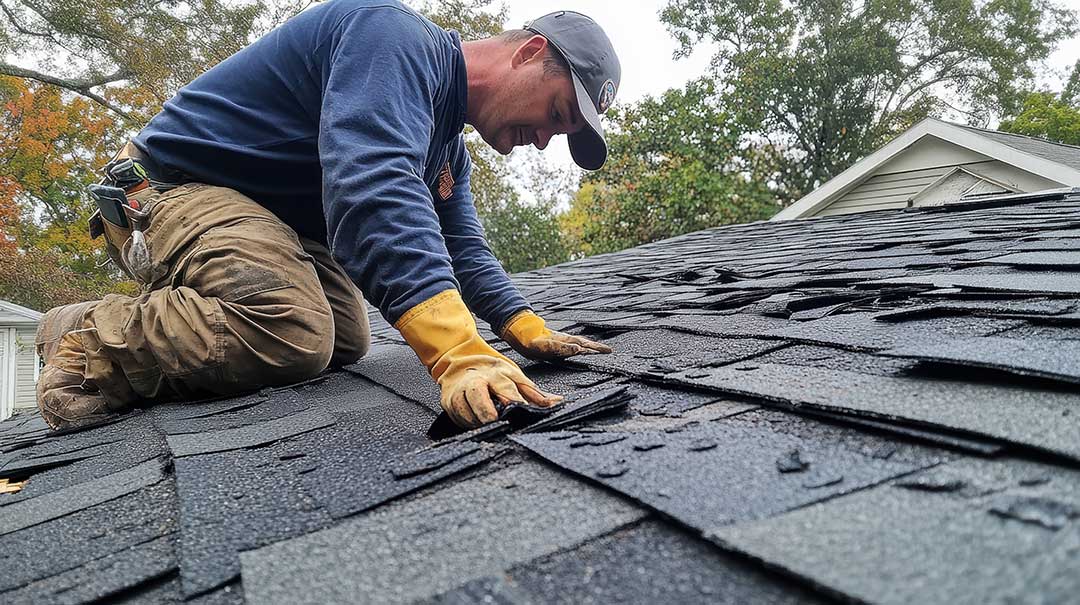
A temporary covering can reduce water entry, but it must be installed correctly and only under safe conditions. A tarp works best when it extends beyond the damaged area and is secured without relying on loose objects that could blow away.
Avoid placing bricks, concrete blocks, or scrap materials on a tarp. These can slide, damage shingles, fall from the roof, or become dangerous debris during high winds. Do not staple or nail through an area that is already structurally weak unless the person doing the work understands the roof assembly and can work safely.
Tarps are not permanent repairs. They can collect water, loosen in wind, and conceal hidden damage. Their purpose is to reduce immediate exposure until a proper evaluation and repair can be completed.
For a small, clearly accessible area, a temporary patch may sometimes limit water entry. However, roof cement, sealants, and similar materials can be misused. Applying products over wet surfaces, damaged flashing, or moving shingles may trap moisture or make later repairs more difficult.
How do Dunkirk’s seasonal conditions affect emergency repairs?
The area’s exposure to wind, freezing temperatures, snow, and lake-effect weather can make roof emergencies more complicated. Winter conditions may hide damage beneath snow or ice, while repeated freezing and thawing can enlarge small openings around flashing, vents, and roof edges.
Ice buildup near eaves can also prevent melting snow from draining normally. Water may back up beneath shingles and enter at the roof edge, even when the roof surface appears intact. Removing ice with a shovel, hammer, or sharp tool can damage shingles and create falling-ice hazards.
During cold weather, temporary measures may not hold as expected. Plastic can become brittle, sealants may not bond well, and wet materials may freeze before they can dry. A repair that appears successful during a brief temperature rise may fail when wind and freezing conditions return.
When is professional help necessary?
Some roof emergencies require trained assistance because the risk is beyond a reasonable household repair. This includes active leaks near electrical systems, major structural sagging, extensive storm damage, roof openings, fallen trees, steep or icy roofs, and damage involving chimneys or other masonry.
A qualified inspection is also appropriate when the leak source is unclear. Water can travel along rafters, roof decking, insulation, and wall cavities, so the first visible stain may be several feet away from the actual opening.
Emergency work should be limited to stopping further exposure and making the area safe. Permanent repairs may involve replacing wet materials, checking roof decking, correcting flashing, restoring ventilation, and inspecting interior framing. Drying the building promptly helps reduce the chance of mold growth and long-term deterioration.
What mistakes should homeowners avoid?
Several common responses can increase damage:
- Climbing onto a roof during rain, snow, ice, or strong wind
- Using a ladder on slippery or uneven ground
- Walking on a roof with visible sagging or damaged decking
- Cutting into a ceiling without understanding where water or wiring may be located
- Applying sealant over wet, dirty, or moving surfaces
- Removing snow or ice with sharp tools
- Assuming a leak has stopped because dripping is no longer visible
- Delaying documentation until the roof and interior materials have dried
A calm response is usually more effective than a rushed repair. Protect the occupants, contain interior water, observe conditions from a safe location, and treat temporary coverings as short-term protection rather than a completed repair.
